What We Detect

Polymer identification,
not just particle counting.

Most microplastics methods — microscopy, FTIR — count and size particles but cannot reliably identify the polymer type. Py-GC/MS pyrolyzes the sample directly and identifies the characteristic thermal decomposition products of each polymer class by mass spectrometry, giving you both polymer identity and mass concentration.

This matters for compliance: regulators and downstream buyers increasingly want to know not just "how many particles" but which specific polymers are present and at what levels.

Polymers we routinely quantify:

Polyethylene (PE) Polypropylene (PP) Polystyrene (PS) Polyethylene terephthalate (PET) Polyvinyl chloride (PVC) Polycarbonate (PC) Nylon / Polyamide (PA) Polylactic acid (PLA) Acrylics (PMMA) Polyurethane (PU) Rubber / Elastomers Multi-polymer blends
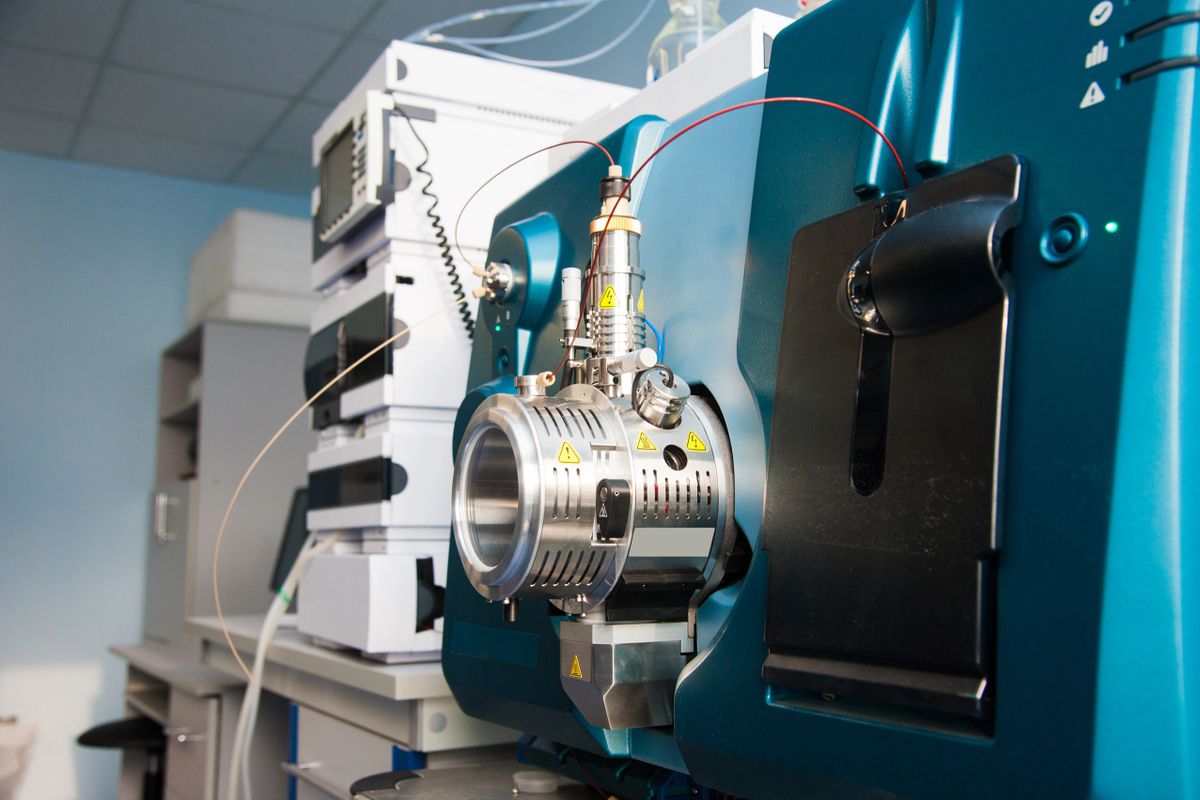
Py-GC/MS instrumentation at Prodigy Labs

Sample Throughput

Standard turnaround is 5–10 business days from sample receipt. Rush analysis available. Incubator tenants receive priority queue access with typical TAT under 3 business days.

Analytical Method

Why Py-GC/MS?

Py-GC/MS is the most chemically specific technique for microplastics characterization — the only method that simultaneously provides polymer-type identification and mass concentration without manual particle sorting.

Method Polymer ID Mass quantification Sub-micron detection Sample prep complexity Throughput
Py-GC/MS Our Method ✓ Yes — definitive ✓ Yes — by polymer type ✓ Yes — to ~1 µm Moderate High
µFTIR / ATR-FTIR ✓ Yes — spectral match ✗ No — particle count only ✗ Limited — >20 µm High — requires sorting Low
Raman Spectroscopy ✓ Yes — spectral match ✗ No — particle count only Moderate — >1 µm Very high — manual Very low
Optical Microscopy ✗ No — morphology only ✗ No ✗ Limited Low Moderate
Nile Red Staining ✗ No — screening only ✗ No Moderate Low High
1

Sample Preparation

Matrix digestion to remove organic material (enzymatic or oxidative, matrix-dependent). Filtration and concentration onto stainless steel foil for pyrolysis loading.

2

Pyrolysis & Separation

Flash pyrolysis at controlled temperature generates characteristic thermal decomposition fragments unique to each polymer class. GC separates the fragment mixture by boiling point.

3

MS Identification & Quantification

Mass spectrometer identifies each fragment by m/z ratio. Marker ions for each polymer class are integrated against calibration standards to calculate mass concentration (µg/L or µg/g).

Who We Test For

Sample Types & Use Cases

Py-GC/MS applies wherever polymer contamination is a quality, regulatory, or brand risk.

💧

Drinking Water & Bottled Water

Quantify microplastics in finished water products, source water, and filtration system effluent. Support California PFAS/microplastics compliance and independent QC documentation.

Bottled water Tap water Filter validation
💊

Dietary Supplements & Nutraceuticals

Test finished capsules, tablets, powders, and liquid supplements. Document polymer absence or levels for consumer transparency and retailer compliance requirements (Amazon, Target, Whole Foods).

Capsules/tablets Protein powders Liquid softgels
🌿

Food & Food Packaging

Measure polymer migration from packaging into food products, or quantify microplastics in seafood, salt, honey, and processed foods. Support clean-label and sustainability claims.

Seafood Packaged foods Migration testing
🌊

Environmental Matrices

Soil, sediment, surface water, and wastewater effluent analysis for environmental monitoring programs, research studies, and regulatory reporting.

Sediment Surface water Wastewater
🧴

Personal Care & Cosmetics

Confirm absence of intentionally-added microplastic beads (restricted under EU Regulation EC No 1907/2006) and characterize incidental polymer contamination in formulations.

Rinse-off products Leave-on products EU REACH compliance
🔬

Research & Academic Studies

ISO 17025-accredited data for peer-reviewed publications. Method development and validation support for novel matrices. High-throughput batch analysis for exposure studies.

Research samples Method development Batch studies

Regulatory Landscape

Why Testing Matters Now

Microplastics regulation is accelerating globally. The testing infrastructure is not keeping pace with the regulatory expectation — and that gap is a risk for consumer brands, manufacturers, and environmental programs that haven't yet established a testing protocol.

🇺🇸 California — SB 1422 & Assembly Bill Activity

California was among the first U.S. jurisdictions to mandate microplastics monitoring in drinking water (SWRCB Resolution 2018-0003). Ongoing legislative activity is expanding testing scope to bottled water, food packaging, and consumer products. California-operating brands and water utilities face the earliest compliance pressure.

🇺🇸 U.S. EPA — Emerging Contaminant Framework

EPA has added microplastics to its Contaminant Candidate List 5 (CCL5) and is developing monitoring methodologies. While federal limits are not yet final, EPA-aligned testing methods are increasingly expected in regulatory submissions and grant-funded research.

🇪🇺 EU — REACH Microplastics Restriction (2023)

The European Chemicals Agency (ECHA) adopted Annex XVII restrictions on intentionally-added microplastics under REACH in October 2023. Products marketed in the EU — including supplements and cosmetics — must demonstrate compliance. Py-GC/MS is the primary method for confirming absence.

🏥 FDA — Supplement & Food Scrutiny

The FDA has not yet issued microplastics limits for dietary supplements or food, but has signaled scrutiny in warning letters related to product quality and container/packaging integrity. Consumer-facing supplement brands are proactively testing to get ahead of incoming guidance and retailer-driven requirements.

🌍 WHO — Global Health Guidance

The World Health Organization's 2019 report called for urgent reduction in plastic pollution and standardized monitoring. International bodies are converging on Py-GC/MS as the preferred confirmatory method, giving ISO 17025-accredited results from this technique the highest evidentiary weight.

🛒 Retailer & Brand Requirements

Major retailers — including Amazon, Whole Foods, and Target — are increasingly requiring third-party testing documentation for supplement and food brands. Microplastics testing is appearing in vendor onboarding questionnaires ahead of any formal regulatory mandate.

Deliverables

What you receive

Every report is issued as an ISO 17025-accredited Certificate of Analysis. Results are formatted for direct use in regulatory submissions, retail compliance packets, and peer-reviewed publications.

  • Polymer-by-polymer quantification — mass concentration (µg/L or µg/g) for each identified polymer class
  • Total microplastic load — summed across all polymers detected
  • Method blank & QC data — procedural blanks, matrix spike recoveries, detection limits
  • Chromatographic data — representative pyrograms and mass spectra available on request
  • ISO 17025 COA — PJLA-accredited, suitable for regulatory submission and publication
  • Chain of custody documentation — sample receipt, handling, and analysis records

How to Submit a Sample

1

Contact us first

Describe your matrix and volume. We'll confirm appropriate containers, preservation requirements, and shipping instructions before you collect anything.

2

Collect & ship with our COC

We provide a chain-of-custody form. Samples typically ship to our San Diego facility in clean glass or stainless steel containers (matrix-dependent).

3

Receive your COA

Results delivered as an ISO 17025-accredited COA within your agreed turnaround window. Digital delivery via the Prodigy Labs platform or email.

Request a Quote →

Related Analytical Services

⚗️

Residual Solvents

USP <467> by GC/FID

🌿

Food Safety Testing

Pesticides, contaminants

📊

GC-MS Capabilities

Full platform overview

🔬

All Analytical Services

Full testing menu

💡

Testing Strategy

Advisory & consulting

Ready to Test for Microplastics?

Contact us to discuss your matrix, volume, and turnaround requirements. We'll provide a quote and sample submission instructions within one business day.

Request a Quote → View All Services