Class 1–3
ICH Q3C solvent classes
Headspace GC/FID
Gold-standard separation method
ppm Detection
Below USP limits of concern
CoA + Raw Data
Regulatory-ready report package

Solvents We Analyze

We screen for all ICH Q3C Class 1, 2, and 3 solvents using headspace equilibration and GC/FID detection. Common requests include:

Class 1 — Avoid (Carcinogenic / Toxic)
Benzene Carbon Tetrachloride 1,2-Dichloroethane 1,1-Dichloroethene 1,1,1-Trichloroethane
Class 2 — Limit (Non-Genotoxic Toxicants)
Acetonitrile Chloroform Cyclohexane Dichloromethane Ethylene Glycol Hexane Methanol Pyridine Toluene Xylene
Class 3 — Limit by GMP (Low Toxicity)
Acetone Ethanol Ethyl Acetate Isopropyl Alcohol (IPA) n-Butanol Heptane Methyl Ethyl Ketone (MEK) Tetrahydrofuran (THF)

ICH Q3C Permitted Daily Exposure Limits

We report results against USP <467> and ICH Q3C limits. Key reference limits for commonly requested solvents:

Solvent ICH Class PDE (mg/day) Concentration Limit (ppm) Key Application
Benzene Class 1 0.002 2 ppm Process solvent carryover
Carbon Tetrachloride Class 1 0.004 4 ppm Legacy extraction solvents
Acetonitrile Class 2 4.1 410 ppm Synthesis, purification
Dichloromethane (DCM) Class 2 6.0 600 ppm Extraction processes
Methanol Class 2 30 3,000 ppm Fermentation, synthesis
Toluene Class 2 8.9 890 ppm Coatings, synthesis
Hexane Class 2 2.9 290 ppm Plant extraction, botanicals
Ethanol Class 3 50 5,000 ppm Tinctures, excipients
Ethyl Acetate Class 3 50 5,000 ppm Botanical extraction
Isopropyl Alcohol (IPA) Class 3 50 5,000 ppm Formulation, purification
Acetone Class 3 50 5,000 ppm Synthesis, formulation

PDE = Permitted Daily Exposure assuming a 10 g/day dose of product per ICH Q3C (R8). Concentration limits based on standard dosage assumption. Contact us for product-specific calculations.

How Headspace GC/FID Works

Headspace gas chromatography with flame ionization detection is the compendial method specified in USP <467> and ICH Q3C. It directly quantifies volatile organic solvents without complex sample digestion.

1

Sample Preparation

Your sample is accurately weighed and dissolved in a suitable diluent (water, DMSO, or organic solvent depending on matrix). The solution is sealed in a headspace vial and equilibrated at controlled temperature — typically 80°C for 30–60 minutes — to drive volatile solvents into the headspace gas.

2

GC Separation

The headspace gas is injected onto a capillary GC column optimized for volatile organics. Temperature programming separates each solvent by boiling point and polarity. A DB-624 or equivalent column resolves the full ICH Q3C solvent panel within a single run, typically 20–35 minutes.

3

FID Detection & Quantification

Each solvent peak is detected by FID, which gives a signal proportional to carbon content. Concentrations are calculated against a multi-point external calibration curve bracketing the ICH limits. Results are reported in ppm (µg/g) with uncertainty and compared directly to Class 1, 2, and 3 acceptance criteria.

Why Headspace GC/FID?

Direct injection of crude samples can contaminate the GC column and introduce matrix interference. Headspace sampling keeps the column clean and delivers vapor-phase analytes free from non-volatile matrix components.

FID is universally sensitive to hydrocarbons, making it ideal for a broad solvent panel without tuning for individual analytes. It also operates without the vacuum requirements or ionization artifacts of mass spectrometry — delivering robust, reproducible quantification aligned to USP compendial expectations.
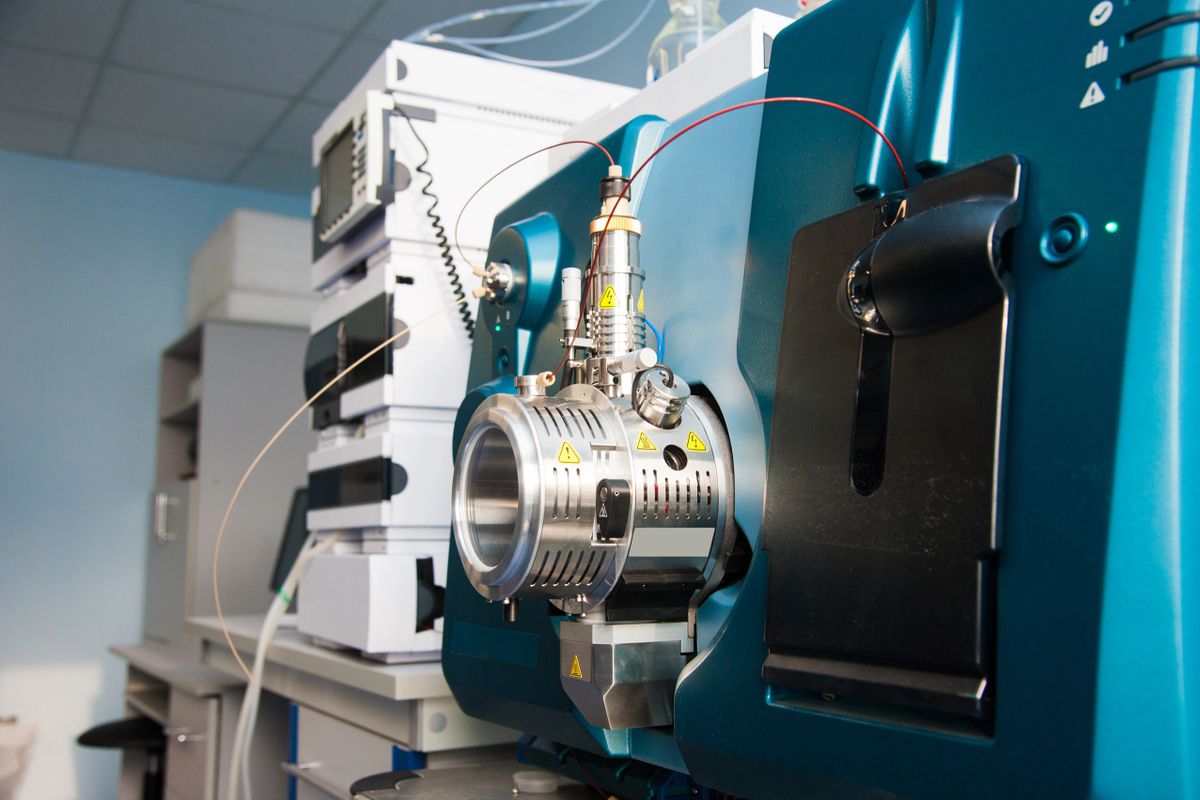
GC instrument at Prodigy Labs

Who Needs Residual Solvents Testing?

Any product manufactured using organic solvents during synthesis, extraction, or formulation may require residual solvents testing before commercial release.

💊

APIs & Drug Substances

Active pharmaceutical ingredients produced via organic synthesis must demonstrate solvent compliance under ICH Q3C before IND/NDA submission or contract manufacturing release.

🌿

Botanical Extracts

Hexane, ethanol, and ethyl acetate are commonly used in botanical extraction. Residual solvent testing is required by FDA dietary supplement cGMPs and many retailer COA requirements.

🧴

Dietary Supplements

Finished supplement products containing extracted ingredients — from plant-based proteins to herbal capsules — must document solvent residues as part of a complete product COA.

🔬

Research Chemicals & Lab Reagents

Contract research organizations and academic spin-outs synthesizing novel compounds need residual solvent profiling prior to biological assay or animal study use.

🧫

Excipients & Drug Products

Pharmaceutical excipients, tablet coatings, and film-forming polymers must comply with USP <467> when used in registered drug products, regardless of whether the excipient itself introduces the solvent.

🏭

Fermentation & Bioprocessing

Downstream purification of fermentation products typically uses organic solvents for precipitation or chromatographic cleanup. Residual solvent testing validates the effectiveness of your washing steps.

Standards We Test Against

Our method is validated against the primary compendial and regulatory frameworks governing residual solvents in pharmaceuticals and food-grade products.

USP <467> Residual Solvents

The United States Pharmacopeia compendial chapter defining acceptance criteria and test procedures for residual solvents in pharmaceutical ingredients and drug products. Our test methods directly implement the Procedure A and B headspace GC protocols.

ICH Q3C (R8) — 2021

The International Council for Harmonisation guideline establishing Class 1, 2, and 3 solvent categories with Permitted Daily Exposure (PDE) values derived from toxicological data. Recognized by FDA, EMA, and PMDA.

FDA cGMP — 21 CFR 211

Current Good Manufacturing Practice regulations require pharmaceutical manufacturers to conduct residual solvent testing as part of batch release and process validation. Our ISO-accredited COA satisfies 21 CFR 211.84 sampling and testing requirements.

FDA Dietary Supplement cGMPs — 21 CFR 111

Dietary supplement manufacturers are required to test or obtain documentation that finished products meet their established specifications. Solvent testing is increasingly expected by co-manufacturers and major retail buyers.

EU GMP Annex 8 / Ph. Eur. 5.4

European Pharmacopoeia and EMA GMP expectations align with ICH Q3C. Products destined for European markets should reference Ph. Eur. 5.4 limit tables, which we can include in reporting on request.

NSF / Retailer COA Requirements

Major supplement retailers and contract packagers require a residual solvents panel as part of the incoming COA for botanical ingredients. We align our panel coverage to common retailer specification sheets.

Report Package

Every residual solvents test includes a complete documentation package designed to satisfy regulatory submissions, batch records, and customer COA requirements.

How to Submit a Sample

Submitting a sample for residual solvents testing takes less than 5 minutes. Most projects turn around in 5–10 business days from sample receipt.

1

Email or Call Us

Send a brief project description — sample matrix, solvents used in manufacturing, and quantity. We'll confirm turnaround and quote within one business day.

2

Ship Your Sample

We'll send you a sample submission form and shipping address. Most residual solvents samples require only 50–200 mg of material, shipped ambient or cold depending on stability.

3

Receive Your CoA

Results are delivered as a signed PDF CoA within the agreed turnaround. Rush turnaround (2–3 business days) is available for urgent regulatory timelines.

Request a Quote →

Ready to Test Your Product?

Send us your samples and receive an ISO 17025 accredited Certificate of Analysis. Results in 5–10 business days.